
Cosmos Staking: Staking Yield Dashboards vs Automated Solutions
Reading Time - 10 min
For years, staking followed a simple pattern.
You delegate and stake. Check the APY. Monitor the validators. Then you manually claim staking rewards and redelegate.
Staking yield dashboards made that easier. They brought visibility and transparency to Cosmos staking and other blockchains. But monitoring your staking positions doesn’t maximize yield, leaving gains on the table.
So the question is:
Should you rely on a dashboard to manage everything, or is there another approach that can optimize your staking with automation?
Let’s break it down in this article.
The Pros and Cons of Staking Yield Dashboards
The Case for Using a Staking Yield Dashboard
Using a staking dashboard is better than staking blindly. Think of it as managing your investments, but not knowing where your money is going and how much you’re getting.
Staking dashboards give you:
- Real-time rewards tracking: See how much you’re earning at any given moment.
- Current APY visibility: Compare validators instantly and identify whether your capital is earning competitive returns.
- Validator commission rates: Avoid overpaying in fees that can erode your long-term staking yield.
- Asst breakdown: Get a clear overview of how your staked tokens are allocated across chains and validators.
- Historical reward performance: Assess consistency over time rather than relying on short-term APY spikes.
If you’re staking Cosmos-based tokens such as Atom, Lava, or Osmosis, dashboards consolidate all your assets into a single interface.
Many platforms also serve as staking yield calculators, allowing you to estimate projected earnings even before you click Stake.
For serious stakers, that data is essential. It turns staking from guesswork into an informed decision-making process.
In short, dashboards give you clarity. But clarity alone isn’t optimization.
Information Without Action
A staking dashboard shows you the problem, but it doesn’t solve it.
That means staking becomes time-intensive, reactive, and manual.
If your validator underperforms for days or months before you notice, you’ve already lost yield. If you forget to claim staking rewards and redelegate, you miss out on compounding.
From Monitoring to AI Staking Automation
Most retail stakers don’t check their dashboard daily. Many check weekly or monthly. By then, optimization opportunities may be gone.
Now, what if there were a way to reduce manual intervention and reliance on human actions? In this way, stakers can maximize their staking yield when opportunities arise.
Polli is a non-custodial staking optimization platform that helps you maximize staking rewards through Artificial Intelligence (AI) driven decision-making.
Instead of manually monitoring validators and redelegating, Polli offers an automated system that continuously monitors and redelegates.
What Is Automatic Redelegation?
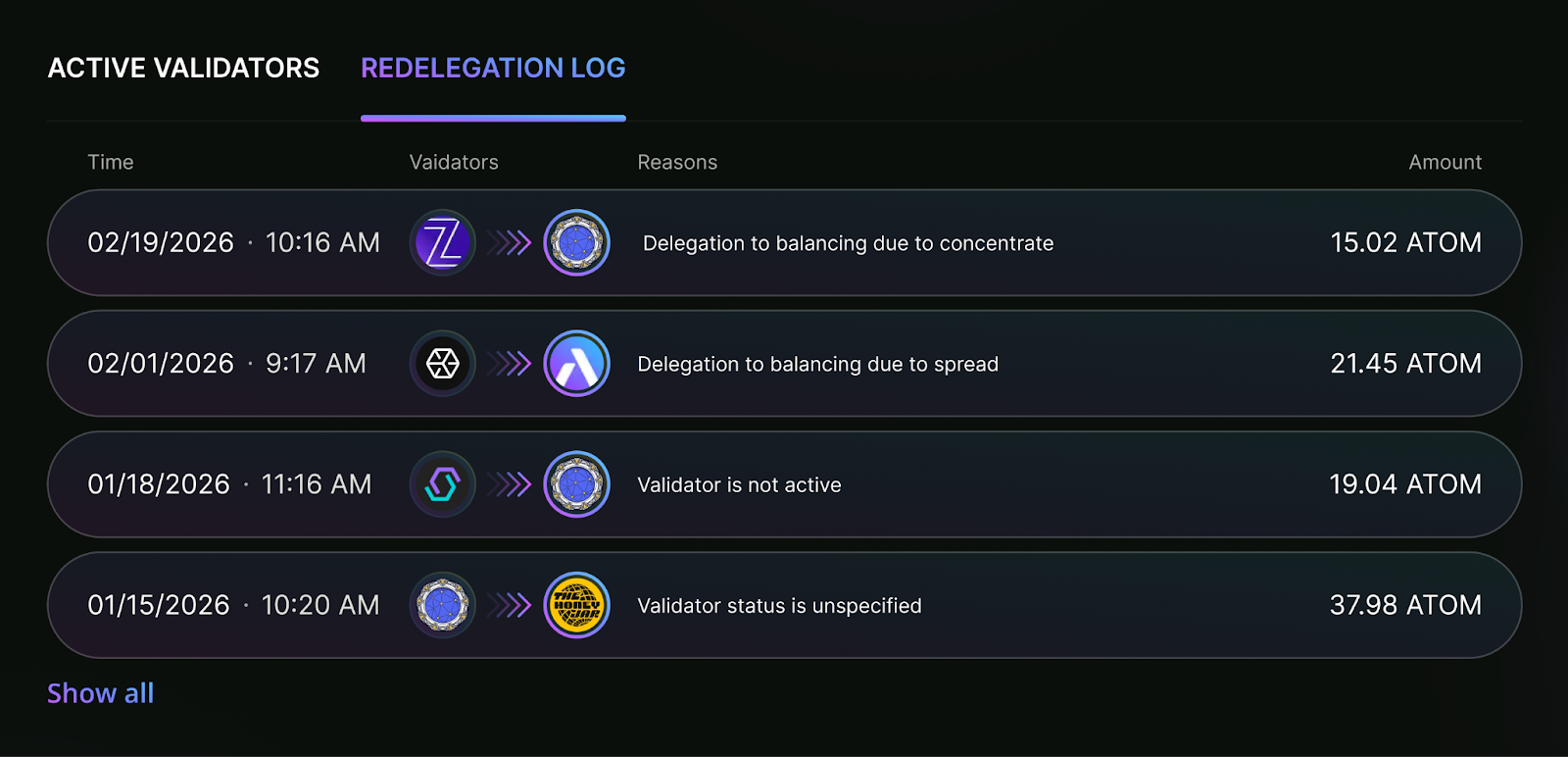
Automatic redelegation lets you reallocate your staked assets when validator performance declines. This process occurs without your intervention.
This automation eliminates monitoring fatigue. Checking your staking dashboard frequently can be time-consuming and tiring. And when you’re mentally stressed, you can make mistakes, further compounding missed yield.
How AI Staking Works
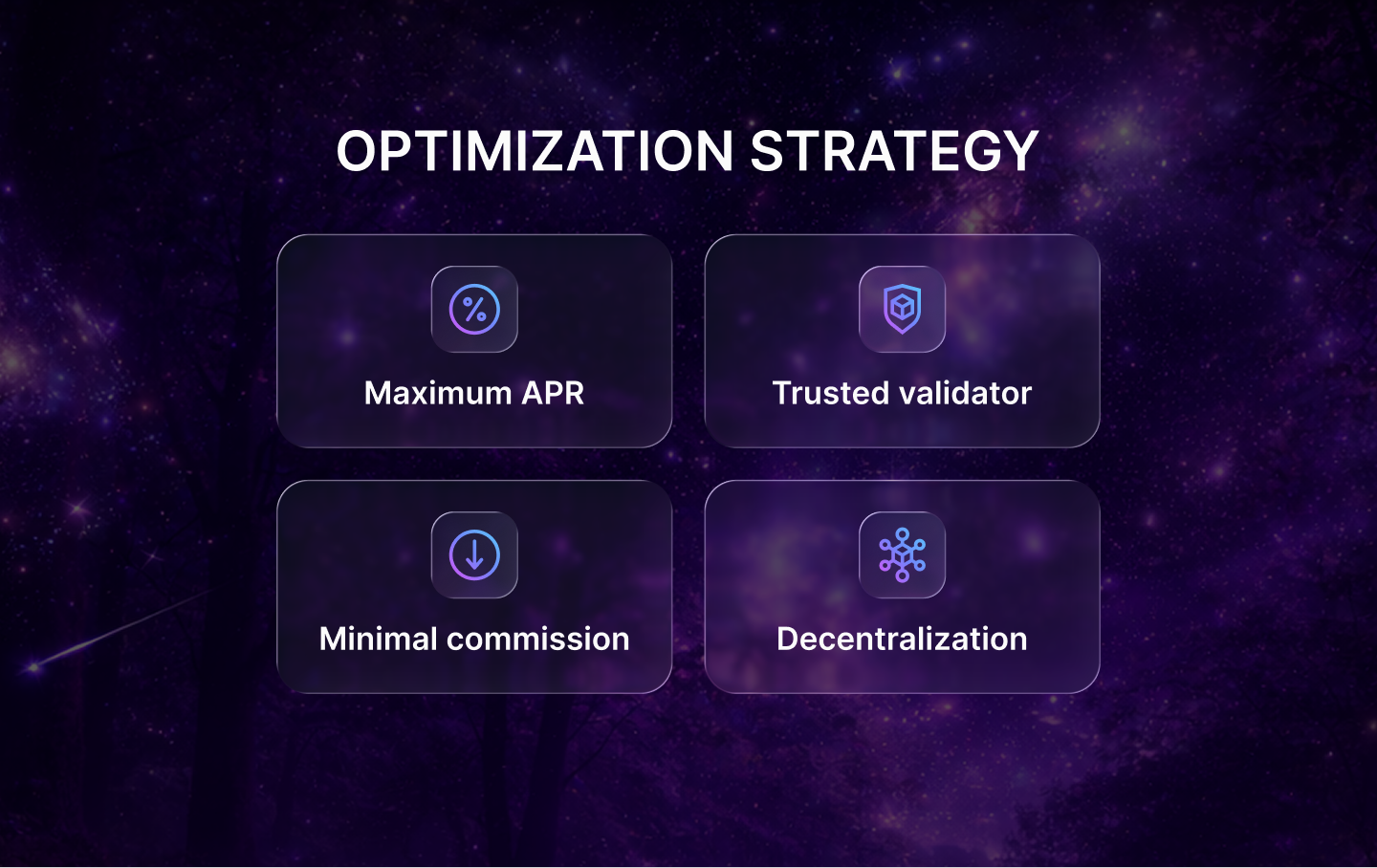
Polli’s AI agents take staking automation a step further.
Instead of simply reacting to downtime, an AI staking system continuously evaluates and optimizes for commission rates, staking reward consistency, historical uptime, and other factors.
AI transforms staking from passive delegation into active yield management.
Rather than “set and check,” staking becomes “set and optimized.”
The Full Stack Solution
With Polli, you get the full solution, with automation and staking dashboards that provide transparency and optimization.
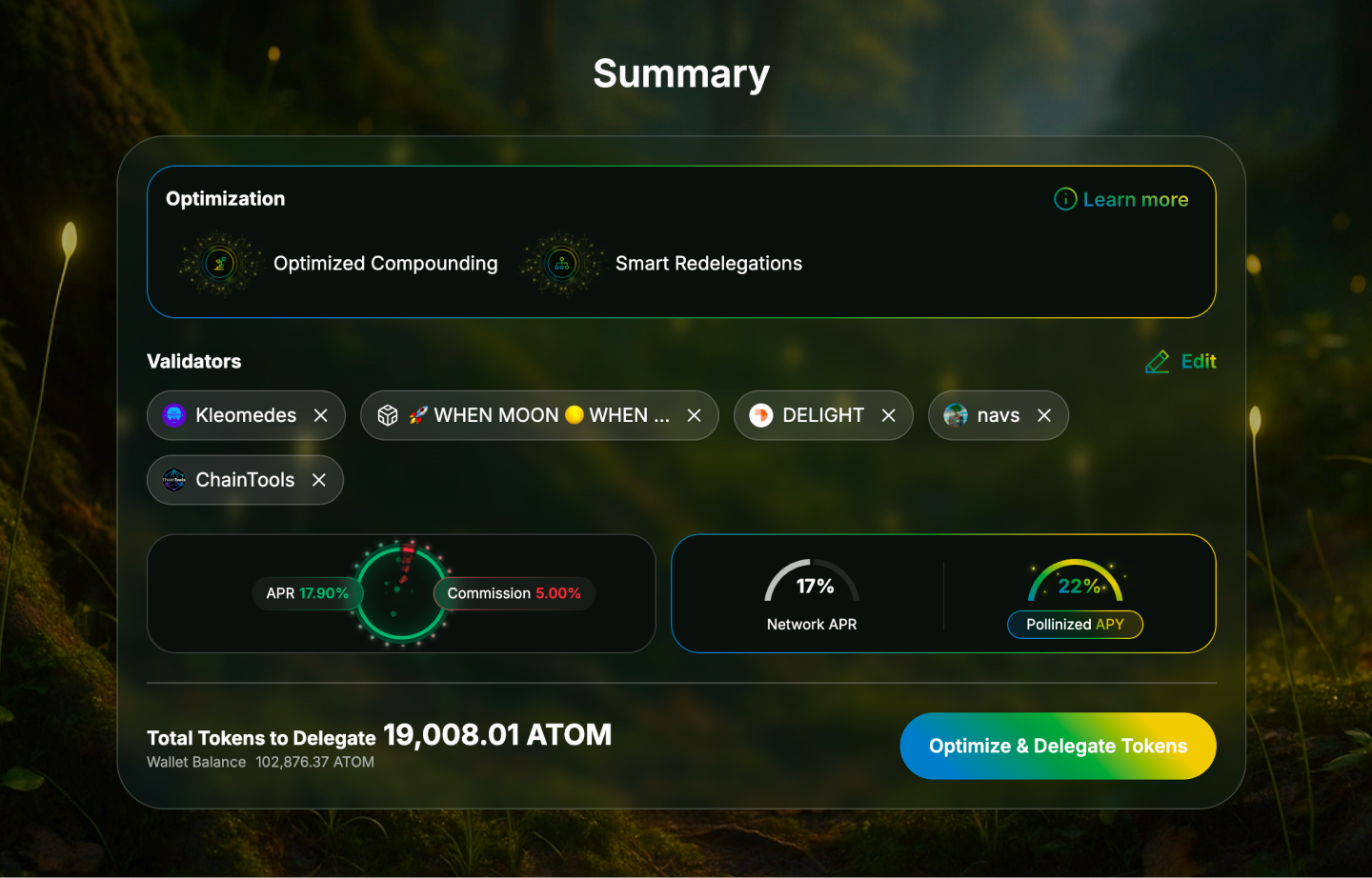
You can monitor if you want. Or you can ignore it and let Polli’s AI agents handle performance.
That’s the difference between dashboard-only staking and intelligent staking.
Traditional Staking Yield Dashboards
To clarify the difference, let’s look at traditional dashboard-only platforms in the Cosmos ecosystem.
Mintscan / Cosmostation
Cosmostation is a South Korean Web3 infrastructure firm. As the third-largest Cosmos validator, they contribute to the ecosystem’s security and health.
They also provide monitoring tools and Mintscan, a popular Cosmos blockchain explorer.
You can stake and monitor assets via the Cosmostation wallet extension or in the browser with Mintscan. The browser application empowers you to participate in the Cosmos ecosystem, from staking to swapping, and even voting on governance proposals.
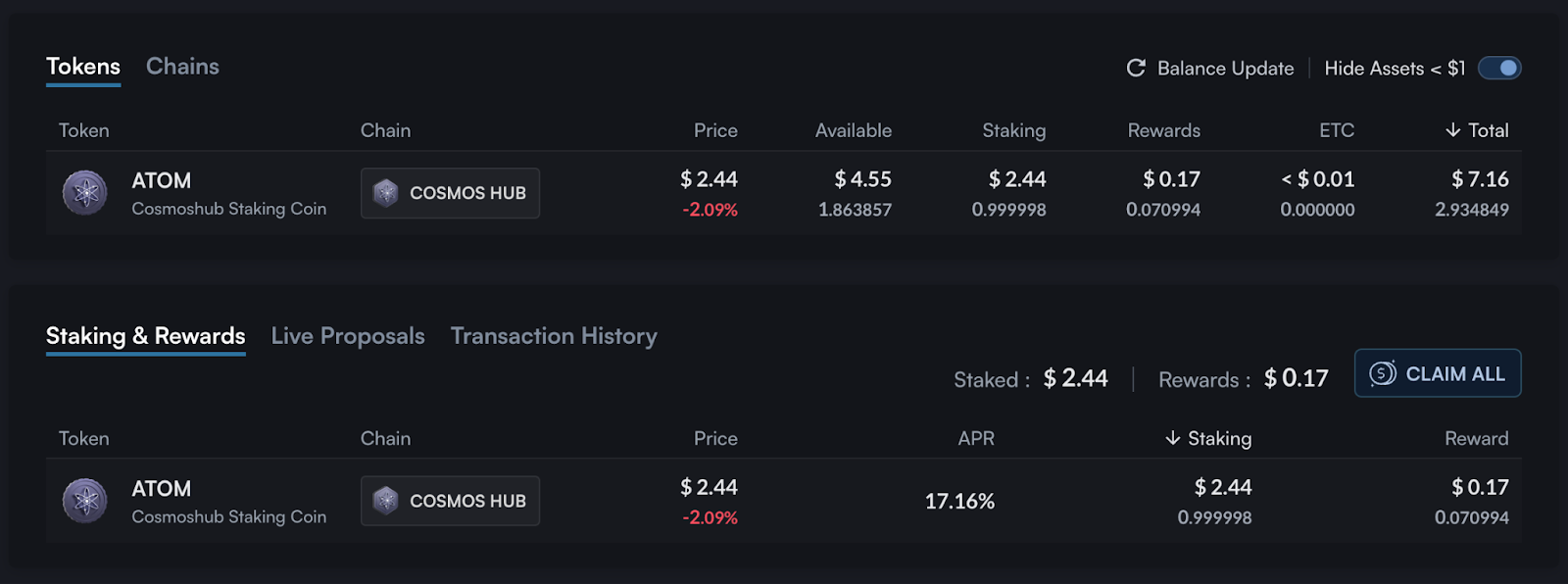
Mintscan provides a dashboard that breaks down your tokens. The dashboard shows how many tokens you’ve used for staking and how much staking rewards are available for claiming.
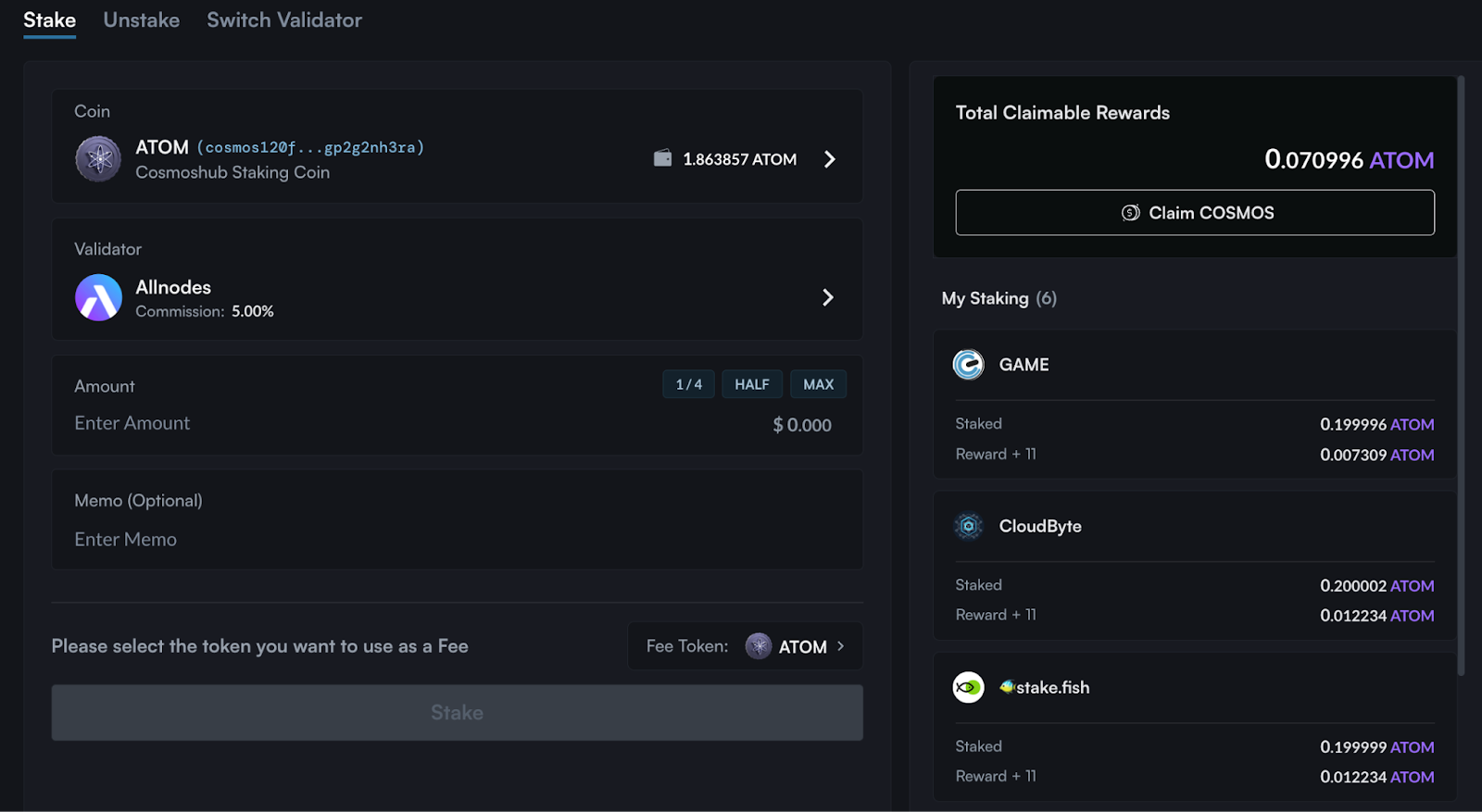
While Mintscan is excellent for visibility, it stops at monitoring. You’re entirely responsible for optimizing yield.
Keplr
Keplr is a popular Cosmos wallet. The browser extension is simple but does the job.
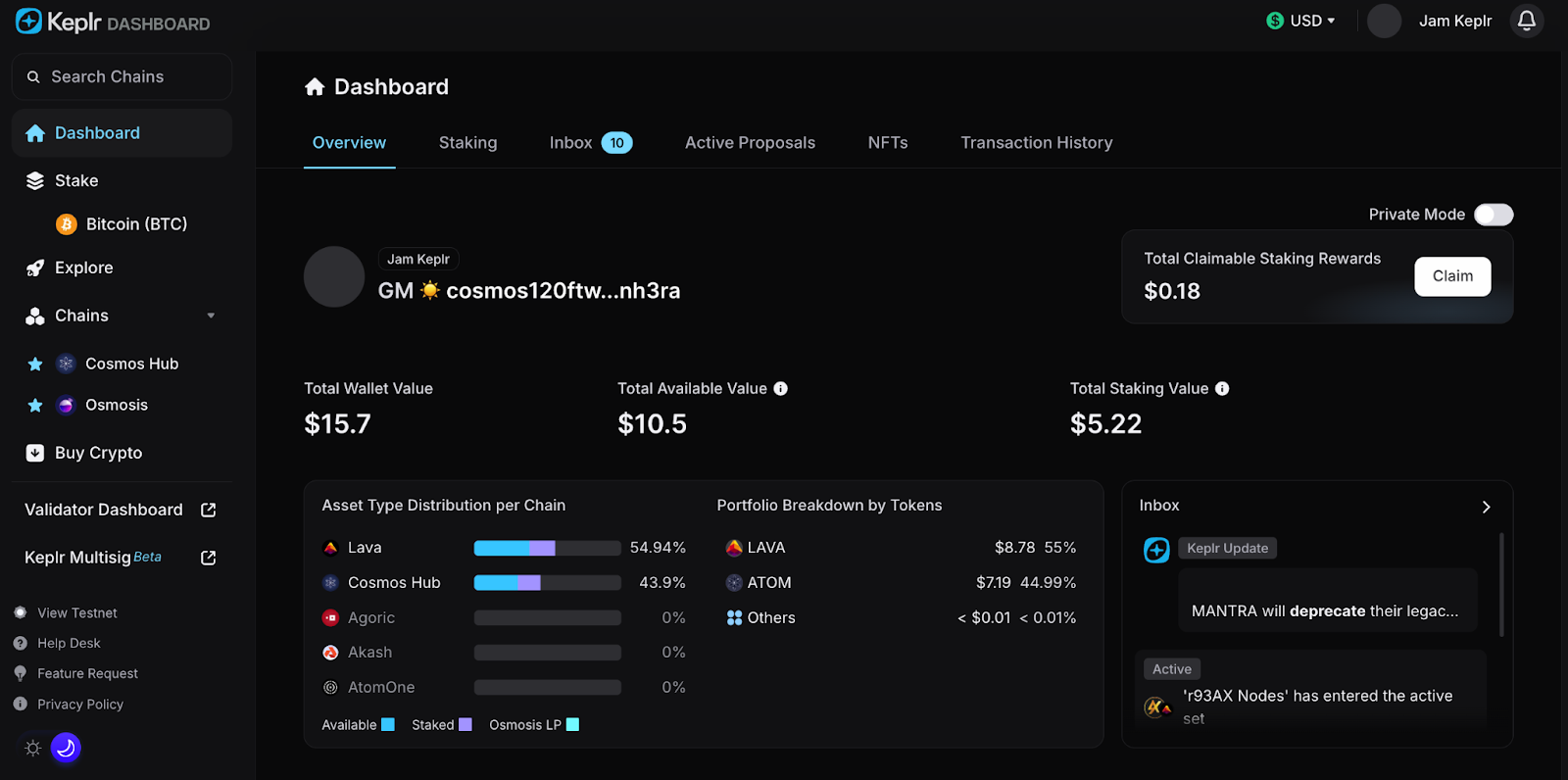
Keplr gives you a bird’s-eye view of your portfolio.
The dashboard splits your assets by chain and by tokens. It also has a dedicated staking section.
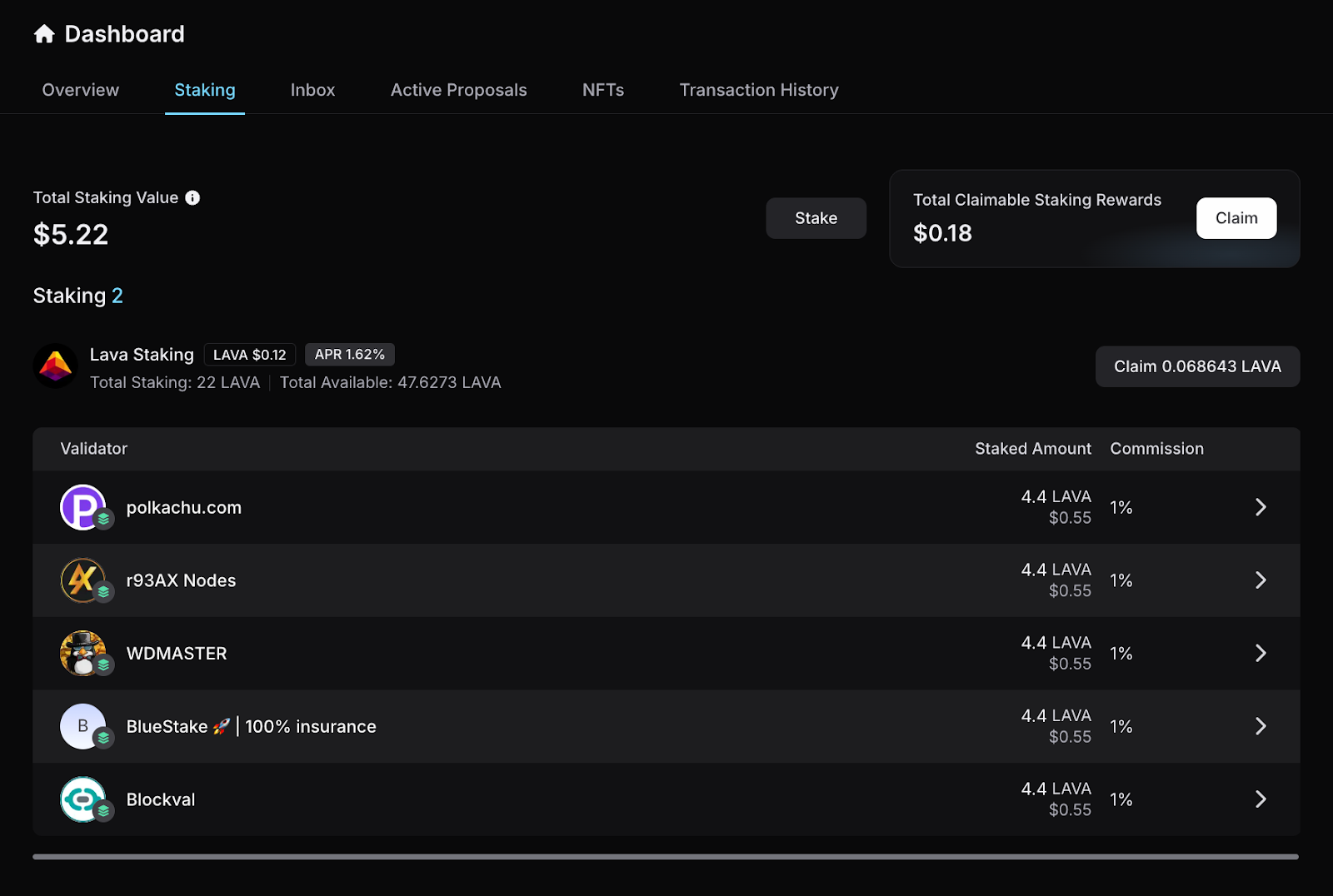
Keplr supports most Cosmos-based staking chains, such as Lava Network. These new networks will appear on the staking dashboard.
Through Keplr, you can easily claim your available staking rewards and delegate them to a validator. You can select one of your existing validators, and Keplr will lead you to the staking page.
One caveat here is that Keplr does not yet support redelegation, a native feature of chains like Lava. You will be unable to maximize your assets unless you redelegate.
Staking Yield Dashboard vs Automation
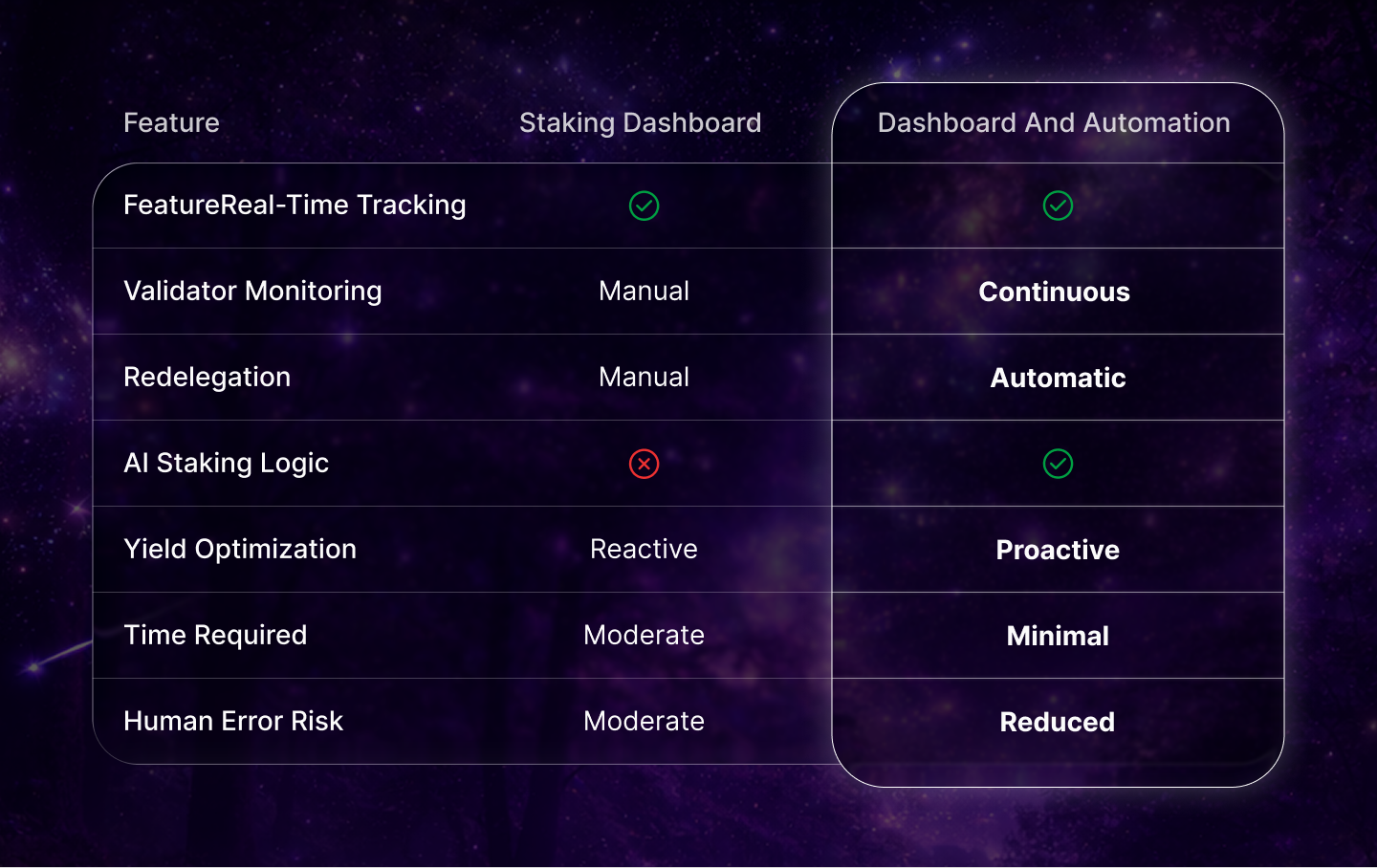
A staking yield dashboard improves awareness while automation improves outcomes.
One thing to note about automated solutions is that they reduce human intervention and error. As artificial intelligence advances rapidly, there may come a time when manual action disappears entirely.
When to Use Dashboards vs Automation
We’re not saying that staking dashboards are now phased out. You can use a dashboard-only system if your stake size is small and optimization gains are minimal.
For hands-on stakers who like control, they can also find satisfaction in manual dashboards.
Automation becomes more important the larger your stake size, as even a percentage improvement can make a significant difference over time.
The Economics of Optimization
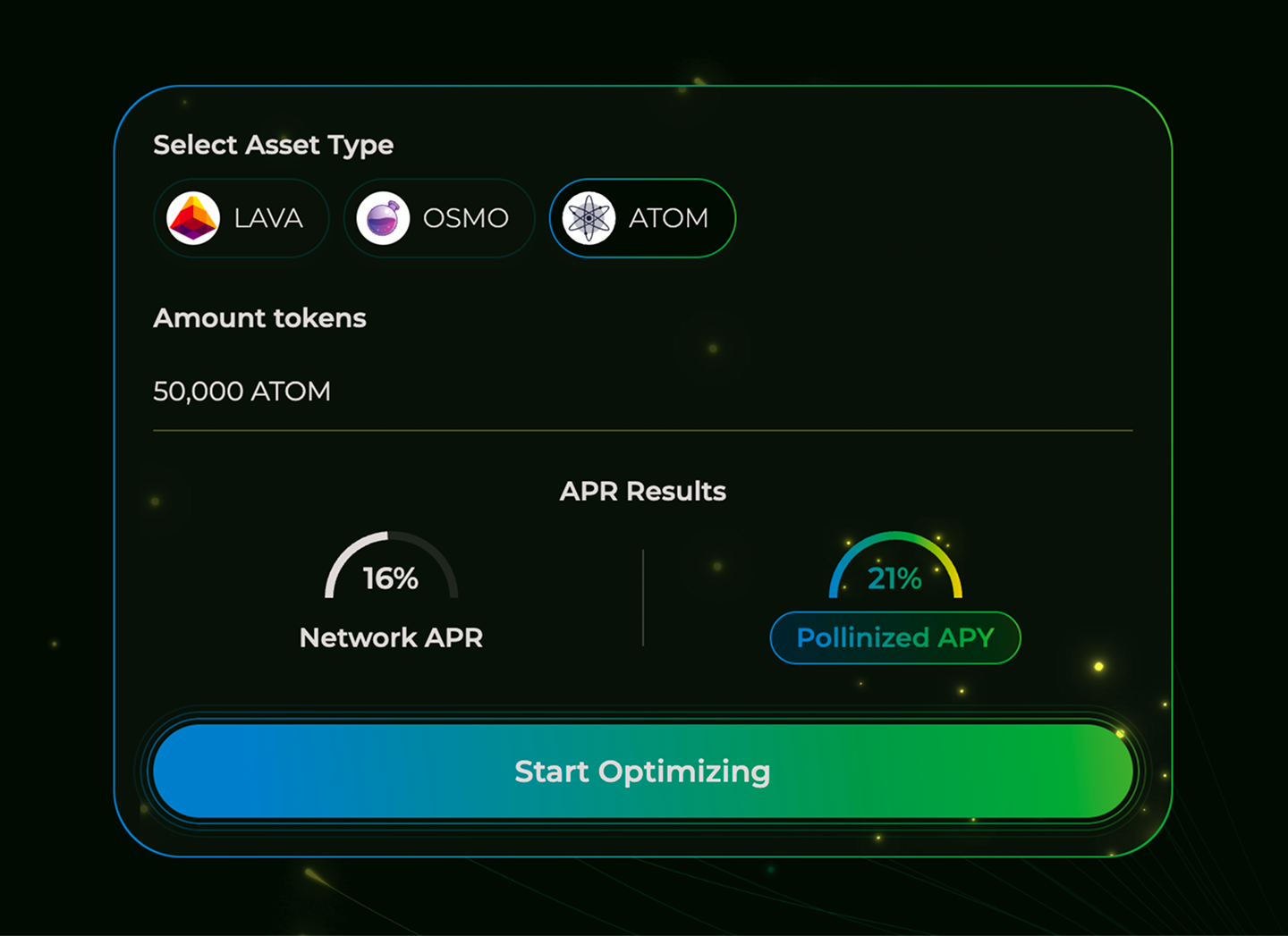
Let’s say you stake 50,000 ATOM:
- At 16% annual return → 8,000 ATOM/year
- At 22% annual return → 11,000 ATOM/year
With ATOM hovering at $2 per token, that’s a $6,000 difference annually.
Over multiple years, compounded, the gap widens.
Final Thoughts
A staking yield dashboard was the first evolution of staking. It gave visibility, transparency, and control. But dashboards still rely on you.
Automation represents the next evolution. It moves staking to a higher level of optimization and intelligence.
The question is no longer whether you need a staking yield dashboard.
The real question is: Do you want to take your staking to the next level?
If yes, visit Polli.co to take advantage of our AI staking optimization solutions.
Frequently Asked Questions
What Dashboards-only Platforms are best for tracking Cosmos staking rewards?
Mintscan and Keplr are widely used for monitoring Cosmos staking rewards. They provide validator data, reward tracking, and manual delegation tools. Platforms combining dashboards with automation, such as Polli, offer additional optimization.
What’s the Difference Between a Staking Yield Dashboard and Automation?
A staking yield dashboard shows performance data. Automation acts on that data through automatic redelegation and AI staking logic.
How Much More Can Automation Improve Staking Returns?
Performance varies based on network conditions and the selected validators. With Polli, automation improves efficiency by reducing delays in redelegation and the drag of underperformance.
Polli’s above-market returns typically offer 15% to 30% higher than native staking.
Is Automated Staking Safe?
Automated staking is generally safe and offers non-custodial solutions. You maintain full control of your assets. Regardless, stakers should review platform security, custody structure, and validator strategy before participating.

March 2, 2026
March 10, 2026