
AI-Driven Staking for DAOs, Foundations, and Institutions
Reading Time - 9 min
In June 2025, the Ethereum Foundation introduced its first formal Treasury Policy. Instead of passively holding ETH and periodically selling to fund operations, it shifted toward staking and selective participation in DeFi to generate sustainable yield.
This move reflects a broader institutional evolution. DAOs, crypto-native foundations, and staking ETFs are no longer content to hold idle tokens. Capital is expected to work.
But once institutions embrace staking, a new challenge emerges:
How do they maximize returns without increasing operational complexity or smart contract risk?
Enter artificial intelligence systems. Polli’s AI-driven staking agents enter the equation. They transform treasury management from manual oversight to intelligent, automated optimization.
Understanding Staking Models: Native Staking, Liquid Staking, and Vaults
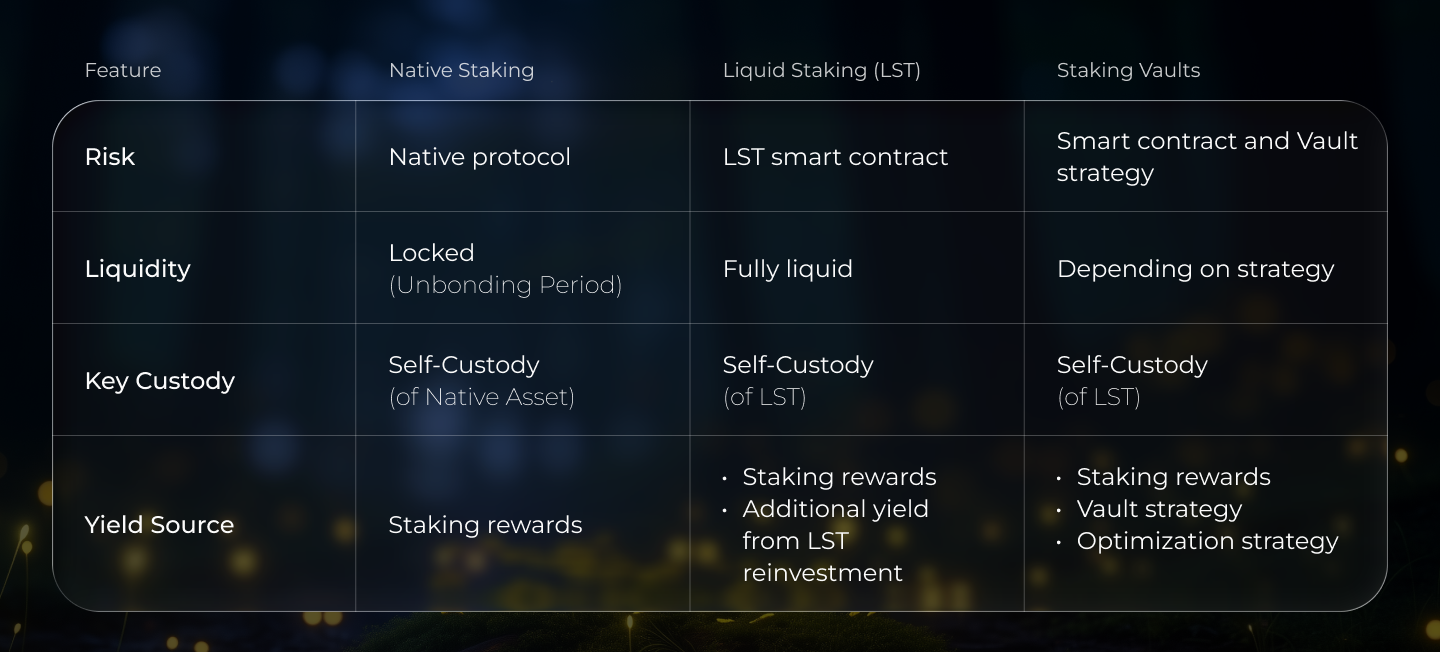
Institutions generally choose between three staking models, each with distinct trade-offs.
There are key differences in operational efforts and risks involved, as the different staking models leverage varying degrees of smart contracts.
Native Staking
Native staking involves either setting up a validator (Proof-of-Stake) or delegating tokens directly to a validator (Delegated-Proof-of-Stake). Institutions interact directly with the blockchain’s consensus layer.
For foundations and crypto staking ETFs, native staking remains the gold standard. It offers regulatory clarity and minimal counterparty exposure.
The trade-offs are operational: validator monitoring, redelegation decisions, and illiquidity during unbonding periods. Depending on the chosen network, staked assets may take anywhere from a few days (for Ethereum and Solana) to 21 days for Cosmos.
Liquid Staking
Liquid staking introduces receipt tokens (LSTs) representing a user’s staked position. Stakers can trade or use these tokens in DeFi while the underlying assets continue earning rewards.
Crypto staking ETFs, such as 21Shares’ JSOL, leverage liquid staking via Jito Finance.
While stakers benefit from flexibility, they incur additional risk.
Institutions assume smart contract risk from the LST protocol and potential de-pegging risk if the receipt token’s value diverges from its underlying asset. A treasury could face significant paper losses even if the underlying network is healthy.
Staking Vaults
Vaults pool capital and deploy it programmatically across validators, LSTs, or MEV strategies to maximize yield.
Staking vaults like StakeWise’s Vaults offer convenience and optimization potential. However, they introduce multiple layers of risk. Transparency may also decrease, making performance attribution more complex.
For institutions prioritizing capital preservation, increasing yield must not mean increasing structural exposure.
AI-driven staking seeks to solve that dilemma by optimizing native staking rather than replacing it.
What is AI-Driven Staking?
AI-driven staking uses AI agents to monitor, evaluate, and optimize validator allocations.
Instead of treasury managers periodically reviewing dashboards and making reactive decisions, AI systems analyze validator uptime, commission trends, reward consistency, and network conditions in real time.
For institutional treasuries, staking becomes an always-on, data-driven allocation strategy rather than a manual operational task.
Key Components of AI Staking Systems
Institutional-grade AI staking systems include:
- Automated Validator Selection Algorithms
- Risk Detection and Slashing Prevention
- Auto-Compounding and Yield Optimization
- Cross-Chain Rebalancing
An AI staking system’s goal is to enhance performance without expanding the risk surface.
How Polli Leverages AI-Driven Staking for Institutions
Polli optimizes native staking, the lowest-risk staking model available to institutions.
Rather than introducing additional smart contract layers or DeFi exposure, Polli enhances validator delegation directly at the protocol level. Institutions also retain full custody of their assets while benefiting from AI-driven automation.
For DAOs, foundations, and ETFs, this approach means improving yield efficiency without altering risk mandates.
Built for Institutional Requirements
Polli supports large-scale treasury allocations without adding operational friction or additional custody layers.
A recent partnership with Kiichain demonstrates this capability. By integrating Polli’s AI optimization layer into its treasury framework, Kiichain enhances validator selection, compounding efficiency, and risk monitoring, all while maintaining conservative native staking.
Polli integrates into existing treasury workflows rather than replacing them. Institutions gain:
- Validator-level reporting
- Redelegation logs
- Portfolio health analytics
- Audit-ready performance data
These integrations benefit treasury optimization without structural complexity.
Automatic Compounding Without Manual Intervention
Manual restaking creates yield drag. Rewards sit idle until claimed, gas fees are often sub-optimally timed, and operational overhead slows execution.
Polli automates compounding. Its AI agents monitor reward accrual and execute claims and redelegations in accordance with optimized timing logic.
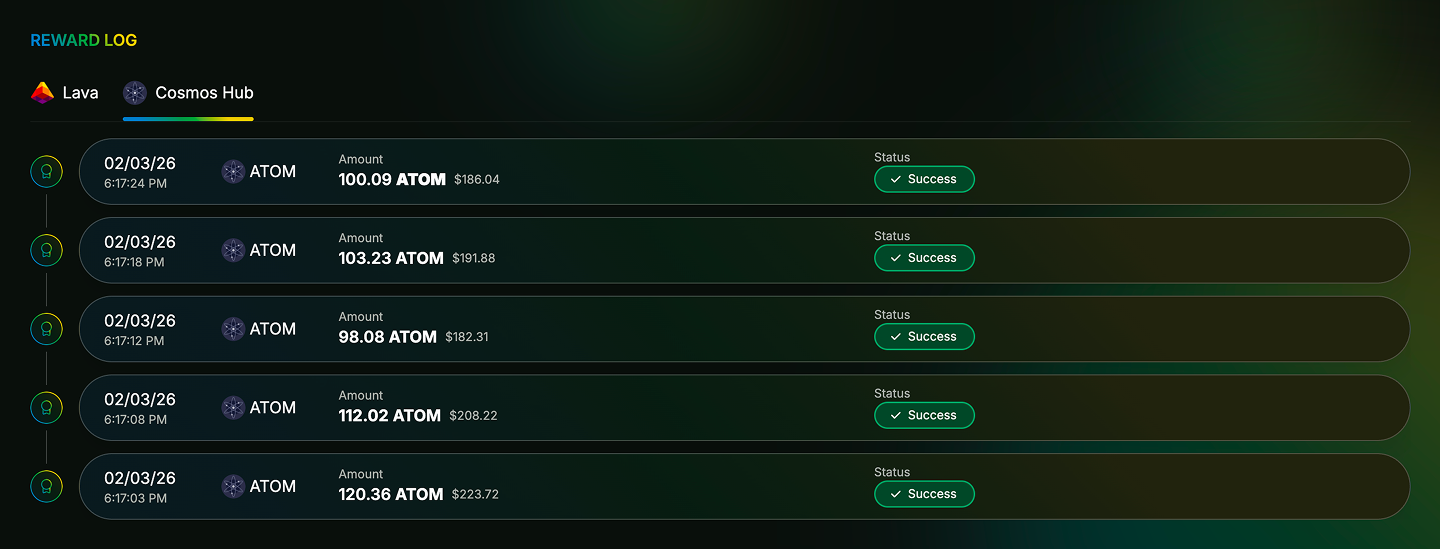
While basic compounding may incrementally lift effective APY, only intelligent, dynamic compounding maximizes returns, especially at scale for large treasury allocations.
The result is higher capital efficiency without increasing protocol risk.
Intelligent Redelegation to Top Validators
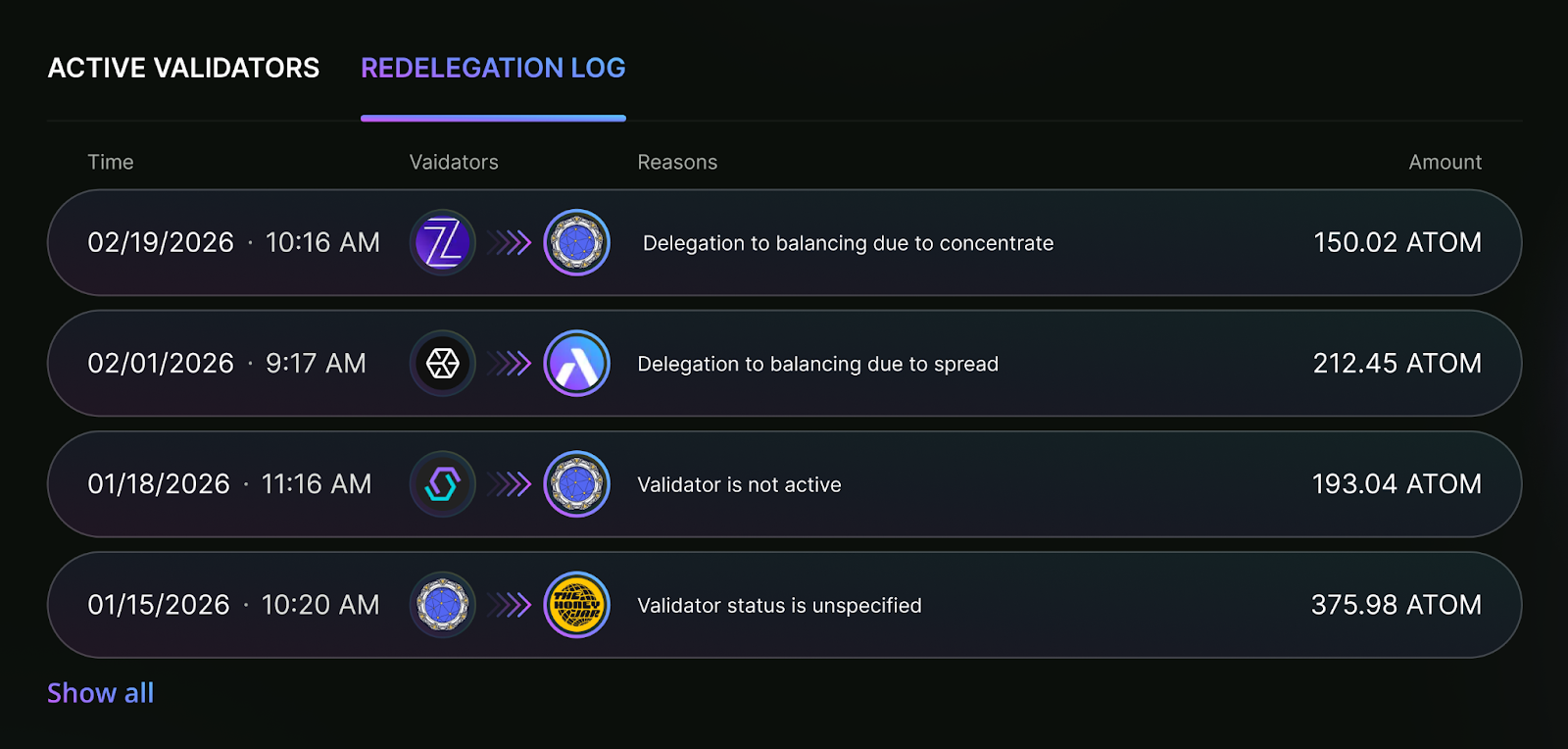
Validator performance is dynamic. Uptime fluctuates. Commission rates change.
Polli continuously evaluates validators using multi-factor scoring models and adjusts allocations when risk-adjusted opportunities improve.
However, optimization does not mean concentration. Many institutions maintain decentralization mandates to keep the network healthy. Polli balances yield maximization with validator diversification to avoid excessive exposure to any single operator.
Institutions gain adaptive performance without building in-house validator analytics teams.
Proactive Risk Management
Yield optimization is incomplete without risk oversight.
Polli monitors early indicators of validator instability and performance degradation. The automated system monitors for when performance breaches predefined thresholds. Allocations adjust before issues materially impact returns.
At the portfolio level, institutions receive structured visibility into allocation distribution, validator exposure, and staking health metrics, ensuring governance oversight.
Closing Thoughts
Institutional staking is evolving.
The question is no longer whether to stake, it’s how to optimize responsibly.
Native staking offers the lowest structural risk. Liquid staking and vaults introduce additional yield potential, but also additional risk exposure. Institutions must understand this spectrum clearly.
AI-driven staking represents the next stage of treasury management: systematic, disciplined, and always-on optimization.
Polli enhances native staking and delivers institutional-grade performance without expanding the risk surface.
For institutional treasuries operating in volatile markets, the edge is no longer speculation. It’s intelligent optimization.
Frequently Asked Questions
What’s the difference between native staking, LSTs, and staking vaults?
Native staking delegates directly at the protocol level with minimal structural risk. LSTs add liquidity through receipt tokens but introduce smart contract and de-peg risk. Vaults layer additional strategy logic that can increase both yield and complexity.
What are the Main Smart Contract Risks in Automated Staking?
None. Automated, AI-driven staking does not use smart contracts; instead, it optimizes native staking.
How do AI staking agents select validators?
AI agents use multi-factor scoring models that evaluate uptime, commission trends, reward consistency, decentralization metrics, and behavioral anomalies to optimize allocations.
Is AI-driven staking suitable for DAO treasuries?
Yes. It helps DAO treasuries increase capital efficiency while maintaining predefined risk parameters and reducing manual oversight requirements.
How does Polli’s AI optimize staking returns?
Polli enhances native staking through automated compounding, intelligent redelegation, and continuous risk monitoring. These improve effective APY without adding new smart contract layers.

March 9, 2026
March 9, 2026